
- September 1, 2026
- 163
On the Eve of September 1, Krystyna Dzierżyńska on the Challenges and Successes of Polish Schools in Lithuania
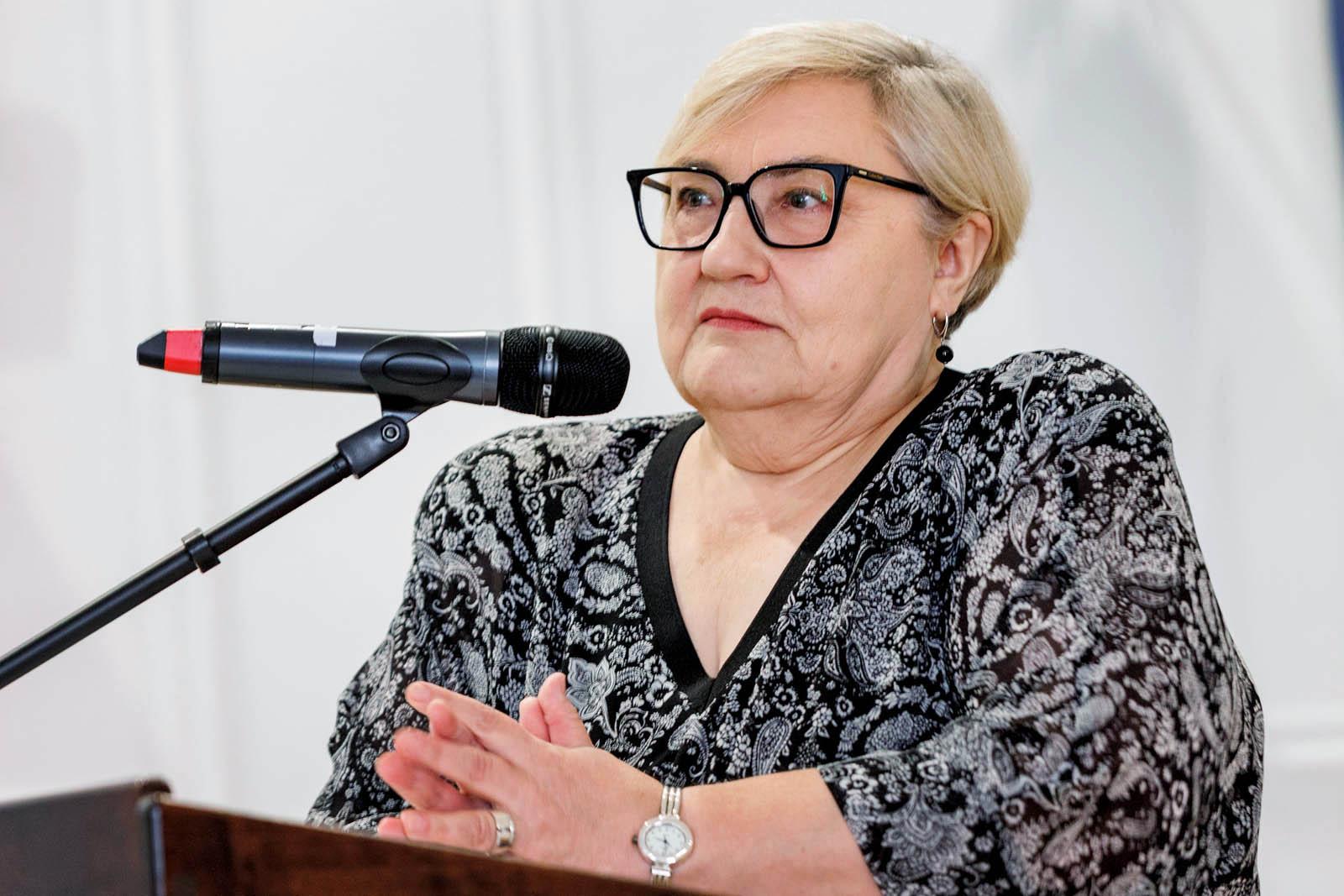
This school year, around 800 first-graders will begin their education at Polish schools in Vilnius and the Vilnius Region. Krystyna Dzierżyńska, president of “Macierz Szkolna,” the Association of Polish School Teachers in Lithuania, speaks with “Kurier Wileński” about the challenges Polish schools are currently facing and the successes that can be noted in the education system.
An Unfortunate Situation
— We regret to say that, unfortunately, the situation is not normal, as two Polish schools have lost their legal status as a result of a decision by the Trakai District Municipality. The Longin Komołowski Gymnasium in Paluknys has become a branch of the Henryk Sienkiewicz Gymnasium in Lentvaris, while the Andrzej Stelmachowski Primary School in Old Trakai has become a branch of the Gymnasium in Trakai. This is a sad development, because children who have studied at these schools for many years are now learning that their school is no longer an independent institution. It is difficult to regard such action as being taken in the best interests of the child. In other districts and in Vilnius, the situation is relatively normal. Thanks to the efforts of many people, the case of the students from the “Wilia” School-Kindergarden – who, due to their parents’ lack of a declared place of residence in Vilnius, could not be admitted to the John Paul II Progymnasium in the capital – has been successfully resolved. As for the successes, we can be pleased with the relatively good results of this year’s highschool graduation exam, especially the 39 perfect scores in the state examination in the native language. As always we will make a final assessment of the results during the ‘Best School — Best Teacher’ competition — says Krystyna Dzierżyńska.
She points out that the optimization of the school network remains one of the challenges facing Polish education in the country, particularly in smaller localities.
— The regulation issued by the Ministry of Education, Science and Sport stipulates that eight students are sufficient to establish an eleventh-grade class, and it does not set a minimum number of students for a school. This is undoubtedly a step in the right direction. However, the document also states that the final decision on the matter rests with the municipality. And when it comes to municipalities, we have an example in Lithuania showing that such decisions are not always made in accordance with the expectations of the Polish community. I am, of course, referring to the situation in Paluknys and Old Trakai. Another issue, affecting not only Polish but also Lithuanian schools, is the constant changes to the revised curriculum. Further changes, amendments and additions continue to be introduced, which also does not contribute to the stability of the educational process. Indeed, the entire education system is facing many problems that need to be addressed — notes the President of “Macierz Szkolna”.
Purchasing Textbooks and Significant Support from Poland
— As it happened, immediately after the new core curriculum was adopted in 2022, a major problem emerged concerning the shortage of textbooks. First, the textbooks had to be written in Lithuanian and then translated into Polish. Not all textbooks were immediately available in Lithuanian, so we closely monitored the publication deadlines to ensure that they could be translated into Polish and delivered to schools as quickly as possible. The issue of cost is crucial here. A textbook translated into Polish can be up to 40 percent more expensive than a textbook published in Lithuanian, so the funds available under the so-called class basket were certainly insufficient to purchase such textbooks. Once again, the Institute for the Development of the Polish Language supported us with funds from the Polish state budget, and textbooks were gradually delivered to our schools. Textbooks were also purchased with European funds under the National Education Agency’s “Galimybių mokykla” (School of Opportunities) programme — explains Krystyna Dzierżyńska.
— We are delighted and deeply grateful that Poland regards Polish education in Lithuania as a priority. “Macierz Szkolna” always feels this willingness to help and provide various forms of support to our children and youth. Without Poland’s help, things would certainly be much more difficult. As ‘Macierz Szkolna’ serves as an umbrella organization for all Polish schools and kindergartens in the Vilnius Region, we always strive to ensure that the needs of our education system are met. On behalf of the entire Polish community in Lithuania, we thank our Motherland — Poland, for its understanding and support — emphasizes the President of “Macierz Szkolna”.
Translated by Małgorzata Wojnakowska within the framework of a traineeship programme of the European Foundation of Human Rights, www.efhr.eu.